
Esterson Enjoying Unexpected Racing Career
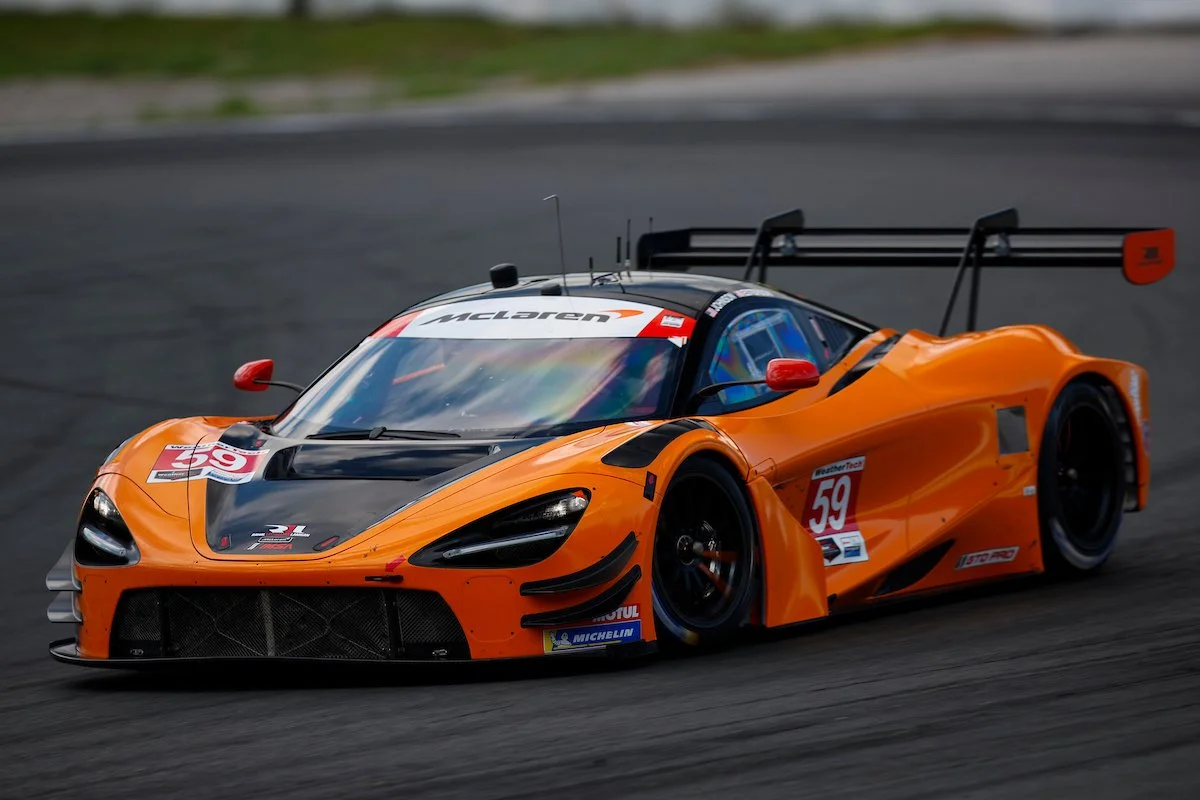
Photo: Jake Galstad/Lumen Digital Agency/IMSA
By Dennis Krause
In a roundabout way, Max Esterson has COVID-19 to thank for his becoming a professional race car driver, something he admits wasn’t on his radar growing up.
“I guess from the very beginning, being a racing driver was not in my plans,” Esterson explained. “Actually, it all kind of came unexpected. I'd done a lot of sim racing since I was young, maybe 10 or 11. I grew up in New York City, so karting wasn't the easiest thing to do, and I was pretty busy with school.
“I got to a pro level on iRacing, I guess you could say, and it kind of spiraled from there, starting with COVID because I was able to do school online. So I moved to the UK and raced in Formula Ford, and then it took off from there and ended up in Formula 2. The path to Formula 1 was quite clearly closed, so it made sense to move over to sports cars to try to make a career for myself, and I've really enjoyed it so far.”
Despite not making it to F1, Esterson was no slouch in open-wheel, single seaters. In 2022, Esterson become only the second American driver to win the prestigious Formula Ford Festival in England. The only other US driver to have accomplished that feat is two-time Indianapolis 500 winner Josef Newgarden.
Esterson, who now co-drives the No. 59 Rahal Letterman Lanigan Team McLaren McLaren 720S GT3 EVO with teammate Nikita Johnson in the Grand Touring Daytona PRO class (GTD PRO) in the IMSA WeatherTech SportsCar Championship, will be making his Road America debut this weekend in the six-hour Motul SportsCar Endurance Grand Prix.
For the 23-year-old Esterson, the transition to sports cars from single seaters has been fun.
“Yeah, I've really enjoyed it so far. The longer races are a lot of fun. It's a lot different to F3 and F2, where when you know you're not in the right car and you qualify 18th, you're probably not going to finish higher than 14th or so. So, it's nice to always have a chance, kind of no matter what's happening in the weekend, and Road America, I think it's a track that suits our car well.
“It's funny at Mosport (Canadian Tire Motorsports Park) we didn't think that would be a track for us, and it was proving to be the case until qualifying, when the team kind of figured out what was going on, and I figured out the track as well.
“This one's also a new track for me. I've never turned the lap there, so, I did the six-hour race on iRacing (last weekend). I'll just say I hope I'm quicker in the real thing than on iRacing now.”
Given his sim racing background, Esterson noted the adjustments he’s had to make to racing in the real world.
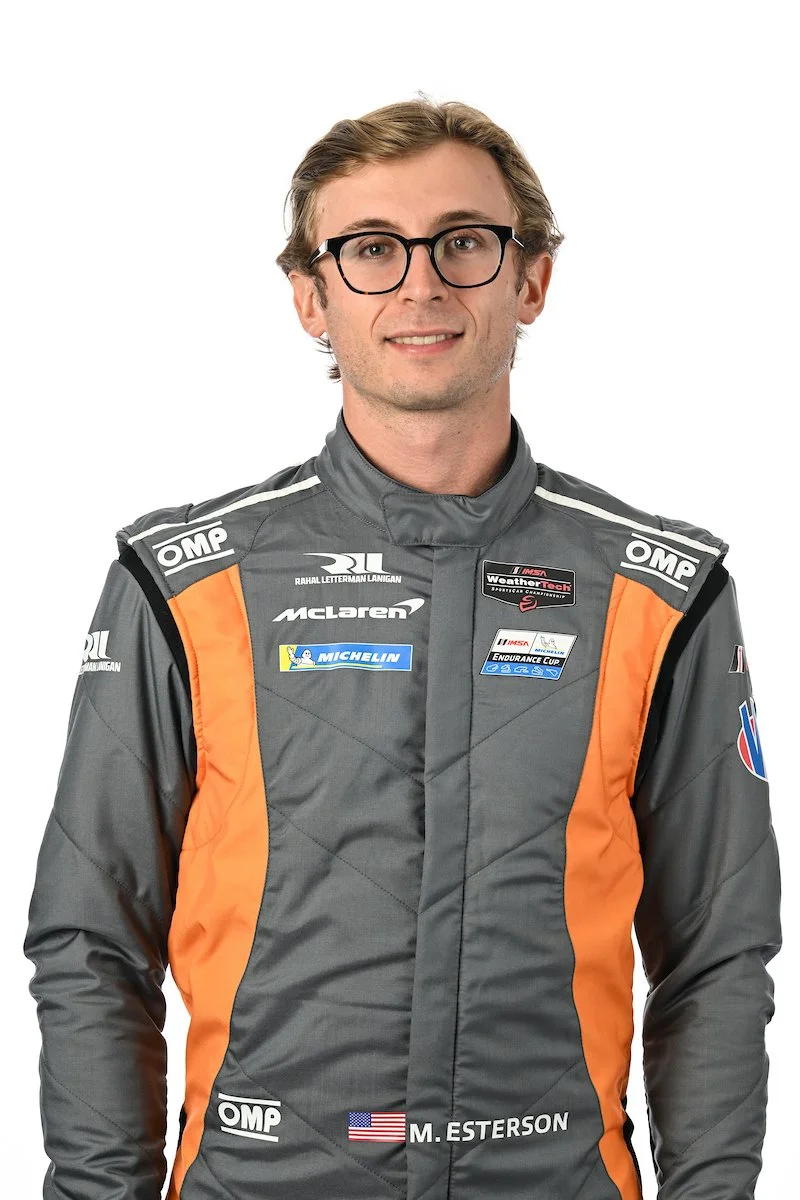
Photo: Brandon Badraoui/Lumen Digital Agency/IMSA
“it's interesting just how much the small things matter. Like with especially pit sequences, it's such a big deal, especially on tracks that you can't pass easily. I think last race (at Canadian Tire Motorsports Park) was a good example where a good in and out lap and you know a bit of a short fill, whether you actually short fill or you just had a good save in the stint before it seems that that often decides the race.
“So, yeah, that's kind of a big thing. You basically got to drive as fast as you can without using too much energy when you know a yellow is likely, I guess.”
The RLL McLaren program didn’t come together until late. Coming off his best qualifying performance of the year, second at Canadian Tire Motorsports Park and a career best finish of sixth in that race, Esterson feels the team is now meeting the expectations it had at the beginning of the year.
“Yeah, I think we've done a pretty good job getting up to speed. I think Daytona maybe weren't in a great window, but I think by the time we got to Sebring, the car was in a pretty good place.
“It's just been about executing in the races. I don't think we've made too many mistakes. It's just a few small issues kind of throughout the race, or you could even say a bit of bad luck. Although, I think that evens out by the end of the year. Yeah, just kind of put us on the back foot in a few of the races, especially at the last race. I think ending up six was a bit disappointing. It wasn't really much we could do about the situation. We just ended up a bit short on fuel because one of the pass rounds was too slow to top up. So it was kind of a hard thing to avoid that perspective, and then plus a little mechanical issues. So it's just been little things like that.
“But I think overall we have a lot of the pieces that we need to get some good results.”
Esterson didn’t meet his 18-year-old teammate, Johnson, until the Roar Before the 24 at Daytona, the week before the season-opening race. Johnson, who also competes in the INDY NXT Series for Cape Motorsports powered by ECR and currently leads that championship, has already raced at Road America this season. Between their six-hour sim session and Johnson’s experience at the track in June, Esterson hopes that’ll help ease his preparation for this weekend.
“Yeah, I think there's been a few little changes to the track this year with some of the exit curbs. So obviously he's experienced that. I'm sure we'll talk on Thursday when we do the track walk. Sure he'll have some advice.
“And yeah, iRacing, the scan is is pretty modern, so not much has changed there. That's been that's been good.
“It's always helpful when you start off in practice one, even if it's at a track you don't know, if your first lap is quite strong already, then you have a good place to build from.”
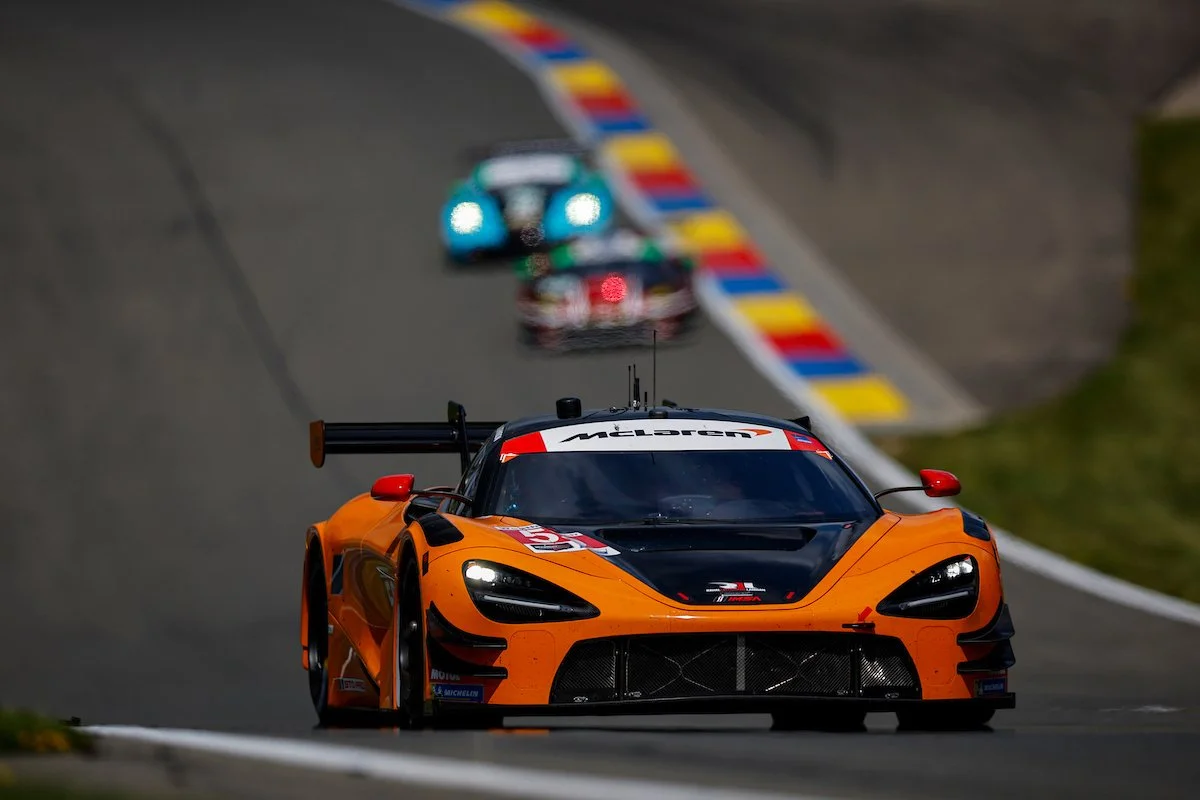
Photo: Jake Galstad/Lumen Digital Agency/IMSA
Unlike in years past, Sunday’s race at Road America will be six hours instead of the previous 2-hour, 40-minute length. While relatively new to endurance racing, Esterson does have experience in a six-hour race recently at Watkins Glen International. According to Esterson, the approach to Sunday’s race will be different from a sprint race.
“Yeah, we only made it five hours last time, so hopefully a bit better now.
“But yeah, I think you just take a bit less risk at the start. Like, when you're on the outside, do you really need to hang on to that one position with five hours 59 minutes to go, or do you end up in the wall? Whereas in a sprint race at Mosport, where you know you're not going to be able to pass, you maybe do take that risk to hold on to that position. So I think that's kind of the main thing.
“You just need to obviously set up to be in a good position at the end, whether that means fuel saving to have a shorter stop or pushing to make a gap. It's all about just being in a good position with an hour to go.”
As to whether he prefers the shorter races to the longer ones, Esterson believes the series provides a good balance throughout the season.
“Overall, I'd say I prefer the longer ones, just because I feel like you qualify last, say something happens in qualifying. You're never really out of it until the last bit of the race, so I think that's nice. You always have a chance. You can always kind of work the strategy in the case that you don't have the pace.
“But yeah, it's nice we get a bit of both. So it's a good balance.”
Esterson’s first real laps at Road America with be Friday morning at 11:25 (CDT).
Dennis Krause has spent decades covering all forms of motorsports, including over 40 Indianapolis 500s, with stints at WIBA Radio, PIT PASS - Radio’s Premier Motorsports Magazine and Motorsports Minute.